Quentin Hardy: The reason I wrote about alchemy and AI is that it is a long dream of humanity to have various types of transcendence, and alchemy is interesting because it is a refinement of the base from the fallen individual into the mage — in the elevation of the things at hand, earthly things into heavenly things, if you will, into eternal things. AI is interesting to that end because it's going to take huge amounts of data and refine it into some kind of deeper wisdom. Eventually, according to the promises of various bigwigs and thinkers, you kind of transmute raw data into a new kind of intelligence that we see in some aspects superior to our own. This just speaks to several longings that have obsessed humans for centuries. All of which I have found historically to be follies. It just doesn't work that way. But the dream never dies.
Eric Rodenbeck: Do you know this book? [Holds up Isaac Newton by James Gleick]
Quentin Hardy: Yes, I know it. I have not read it.
Eric Rodenbeck: It's amazing. I had known a lot about Isaac Newton — or I thought I knew a lot about Isaac Newton, the first rationalist. And I knew that he had dabbled with alchemy and I was just like, "Yeah, sure. That makes sense." He was of his time, they hadn't invented science yet, I'm sure he dabbled with a little on the side. There's no dabbling. He was like a committed hardcore alchemist and approached the motion of the spheres as an alchemical process and with a religious frame of mind.
The invention of calculus and his laws of motion were made by a deeply religious human and there's a speech that was given by John Maynard Keynes at the three-hundredth anniversary of Newton's death that said that we think of Newton as the first of the rationalists but based on his papers this isn't true. I think he was the last magician.
Quentin Hardy: Yeah. And today there are no Isaac Newtons, but Geoffrey Hinton — who really pushed machine learning further, then took machine learning towards generative AI further than anyone — is remarkably quick to conclude this will lead to a kind of superintelligence. He'll say a hallucination is just like John Dean making a mistake when testifying before Congress. It's actually nothing like John Dean making a mistake. It's a statistical drift. It's not human memory failing, which is shot through with emotion and shot through with need and shot through with justification and all these other things that we simply wouldn't even understand how to program yet. But he echoes Newton's desire — and it's a powerful human desire — to find a means to break out of the self and really encounter another mind, to find the Godhead, to find a bigger example or explanation for why we're here doing what we do.
Capitalism and technology are just so addicted to selling you novelty, we lose sight of these eternal dances we're all doing.


Eric Rodenbeck: The other thing that I've been doing is my own transmutation of matter. I have just recently become interested, roughly coinciding with the pandemic, in fermentation both for food and for making pigments and ink. And it's flirting with alchemy in the sense that you're in dialogue when you're doing fermentation. You're in dialogue with microbes and with cultures that transform matter into something almost indescribable. I've read theories that are not entirely off the table that the explosion of the human brain — I think it was sixty thousand years ago, our brain suddenly got a lot bigger — happened because we were able to access much more nutrition. That was just as likely to have come from the discovery of fermentation as it was from the discovery of fire.
Quentin Hardy: Elementary alchemy there. We inadvertently bio-hacked ourselves.
Eric Rodenbeck: I like the inadvertent part of it. You'd be far more likely to find something in the gut of a sheep that was fermented and tasted like cheese than you would be, as a kind of protohuman, to harness fire, which is pretty terrifying stuff. So, this idea that fermentation evolves with us and that it definitely has an industrial form, but there's also a homegrown part of it that I'm finding really appealing.
Quentin Hardy: And it may have been an accidental discovery, but it was systematized. People fermented, and created culture — so to create cultures around that.
Eric Rodenbeck: There's a reason that the word culture means a thing in a petri dish as well as the total of human activity. It's all complex.
Quentin Hardy: Speak more about your pigment project because I saw the slides and I was fascinated but I'm not sure I understood the grounding of that.
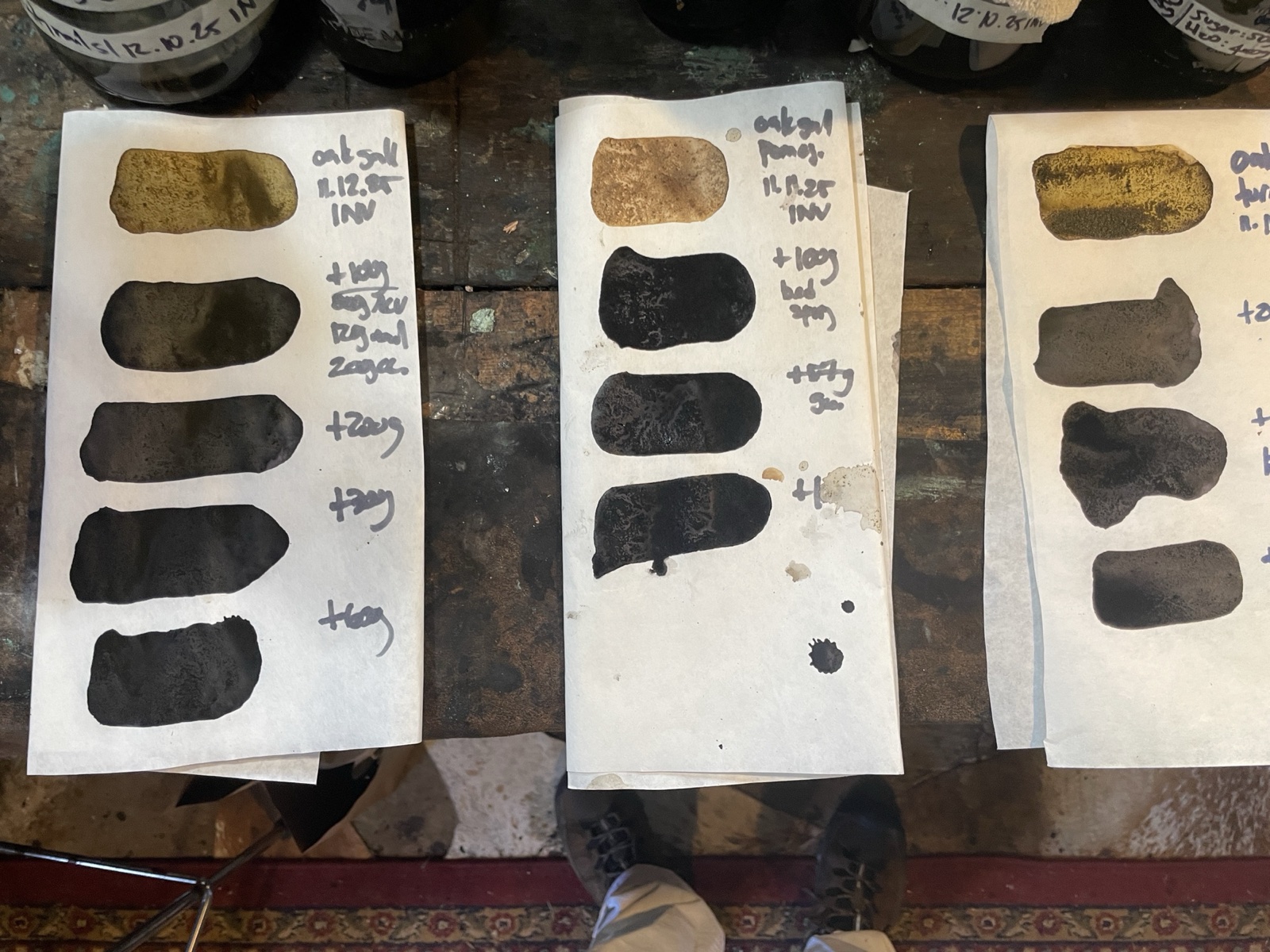
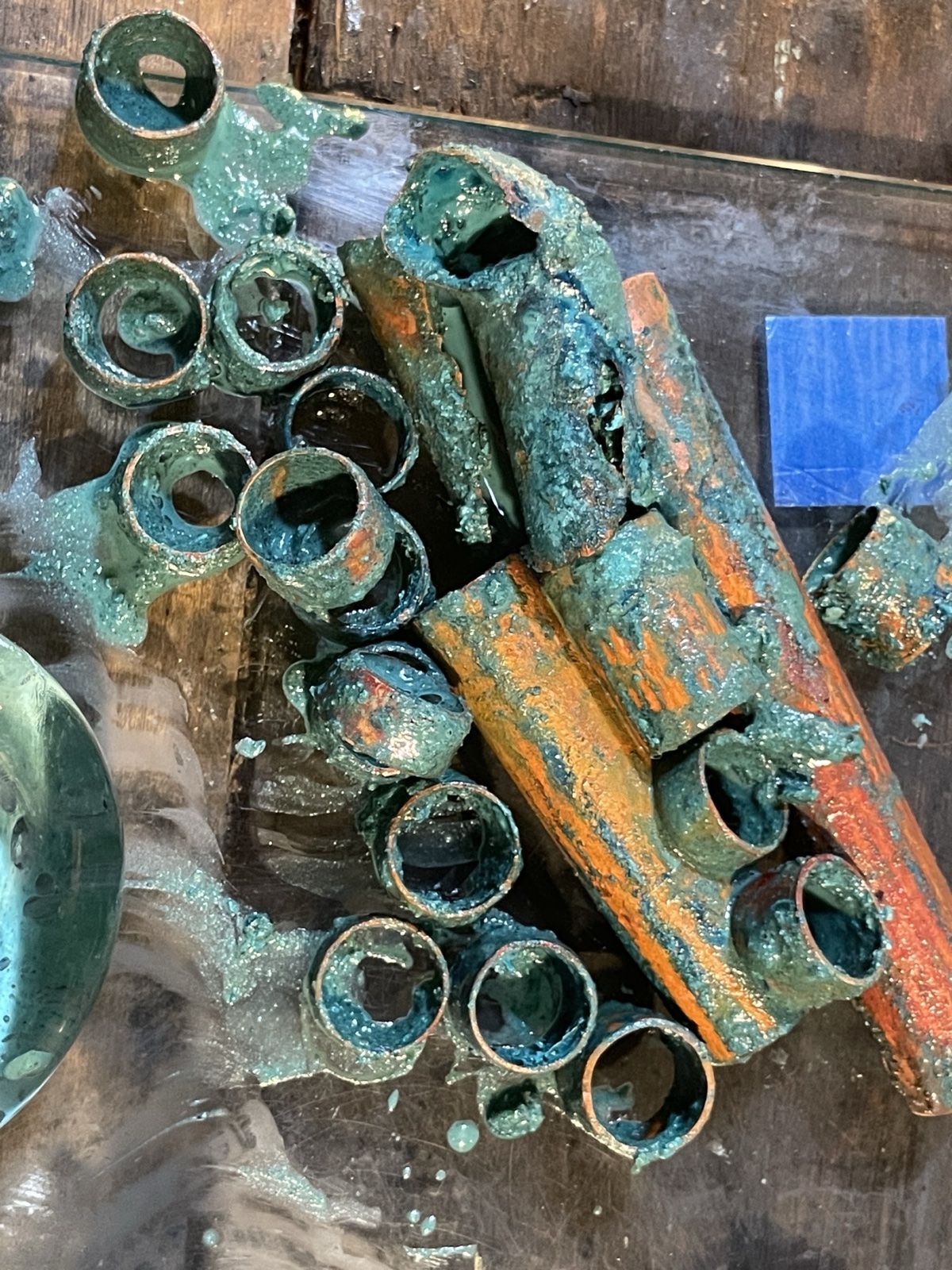
Eric Rodenbeck: It turns out Isaac Newton was obsessed with color and what I didn't know is that he wrote hundreds of ink recipes for lots of different inks. So I'm not saying that I'm Isaac Newton, but I'm rooting around in history and finding people who were obsessed with color and did some pretty marvelous things with it. I started off kind of as an amateur, I was boiling blueberries and whatever — but I discovered pretty quickly that there's a whole process of oxidation that can happen when you mix things like vinegar and copper and salt. You can get incredibly vibrant greens and if you mix them with charcoal you can get a really beautiful blue.
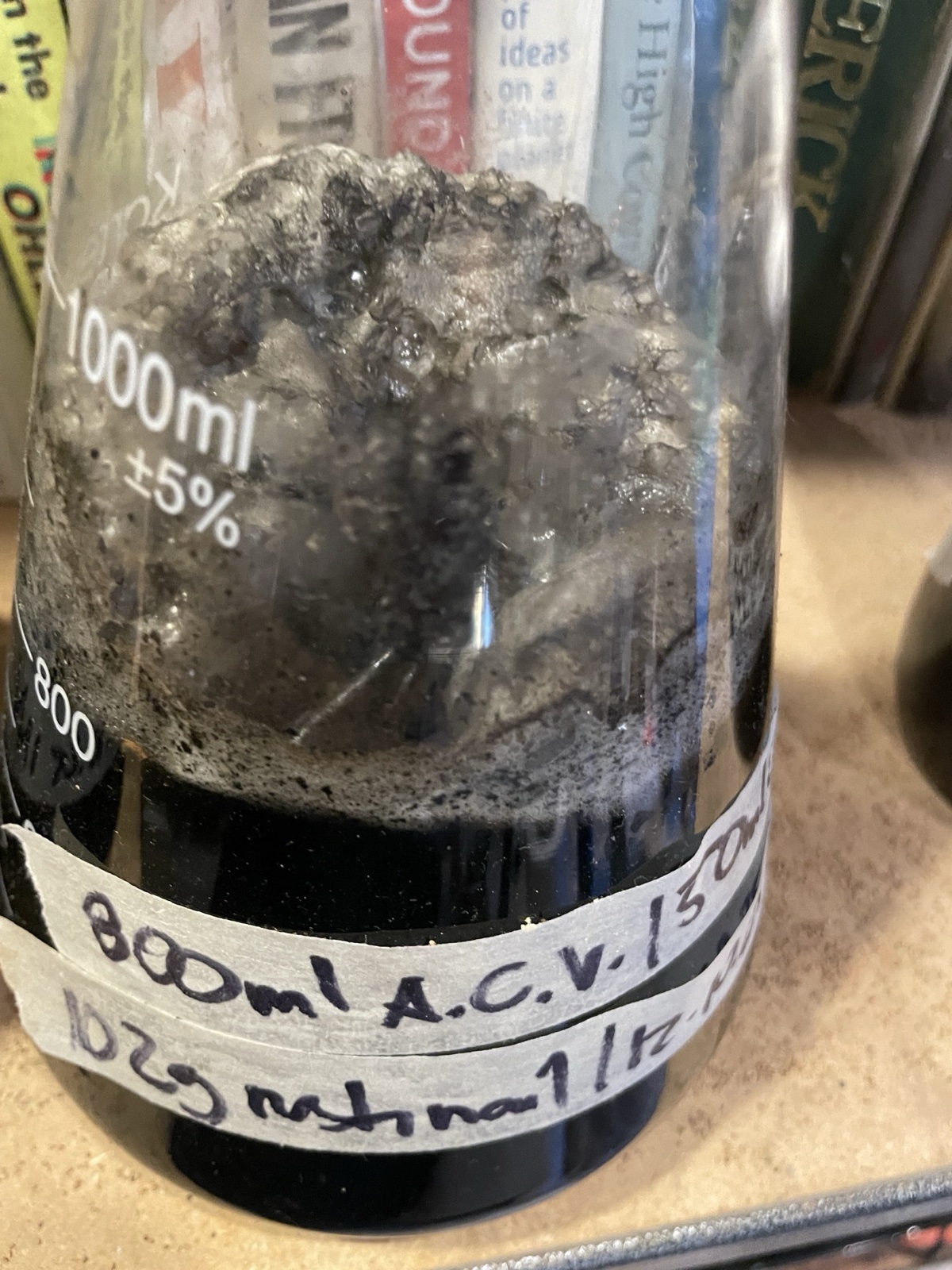
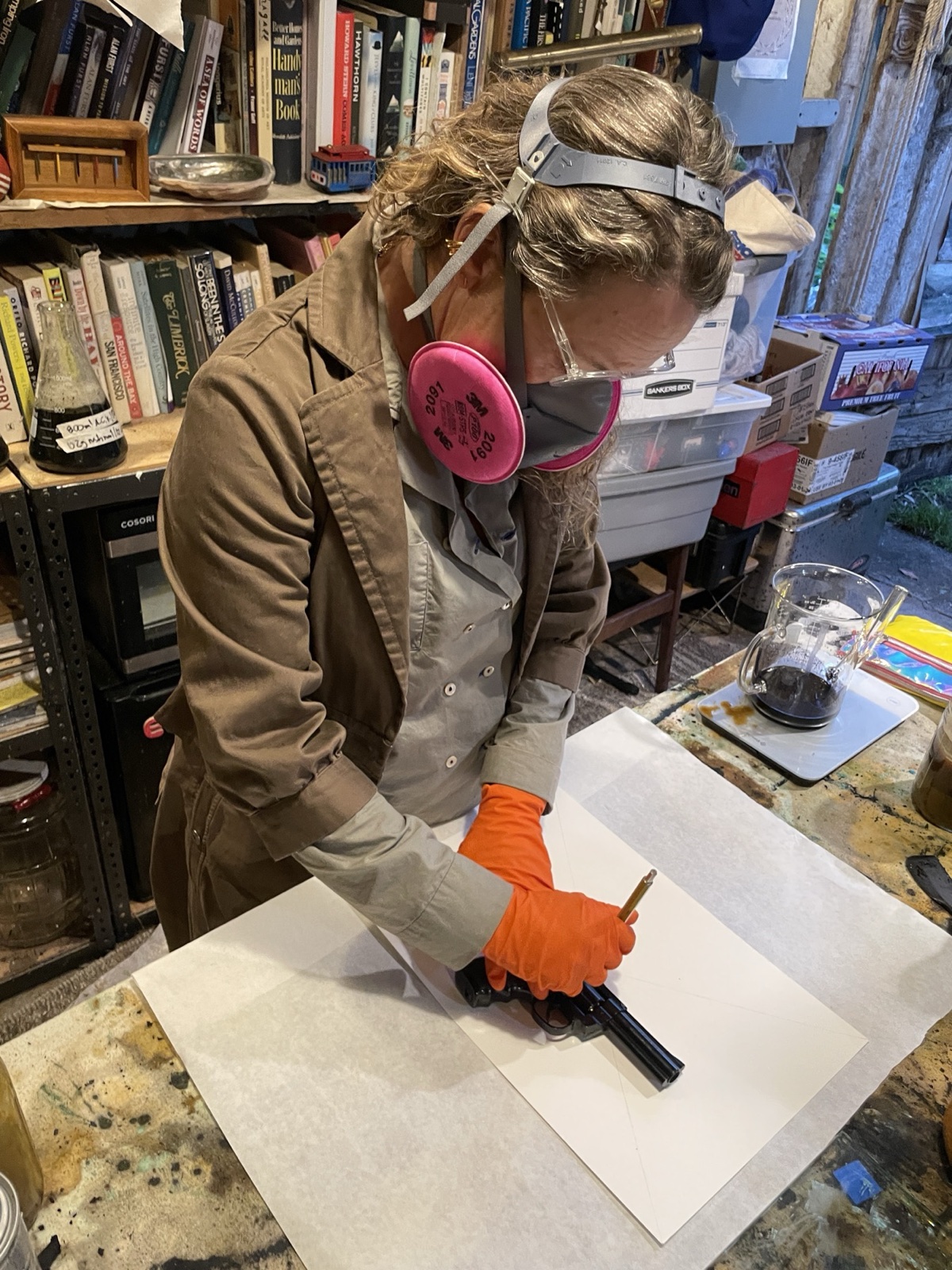
I love that it takes time: it's not an instantaneous thing. You have to wait three months before you get any results. And you're watching the materials bubble and change over time. There's two things that have happened. One of them is you can ferment things with tannins in them like oak galls and grapes and things and you can make a material that reacts really strongly with iron liquor, which is iron that's been soaked in acid and, one of the metals that you can soak in the acid and salt…is a gun.
And I've learned that guns can be transubstantiated into artistic material. And there's something that I'm finding really compelling — it's a sort of swords into plowshares thing. The idea that a gun, which is a ubiquitous American thing, could be transmuted into artistic material and then used to make representations of those guns. My friend Nellie King Solomon is making drawings of guns from ink that I've been making with guns — a kind of transformation of material. It's not stamping out the gun, it's dissolving the gun, there's a slow violence in that which very much appeals to me and also a kind of dissolution of these incredibly violent artifacts.
Quentin Hardy: As we ponder these questions I say this: we are doing this eternal dance of looking for transcendence, transmutation, the true color, the true understanding.