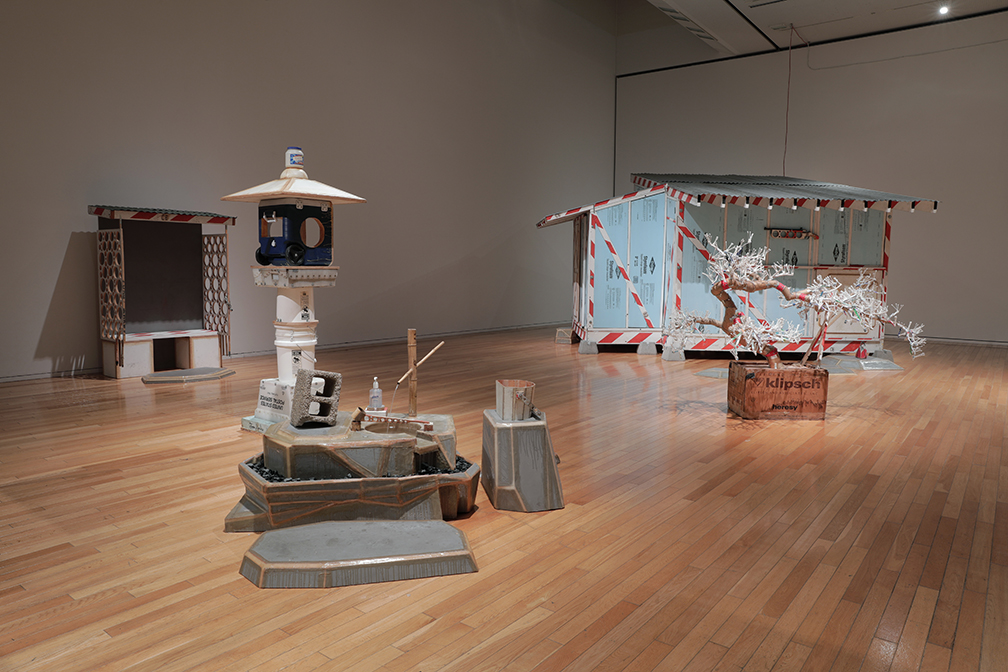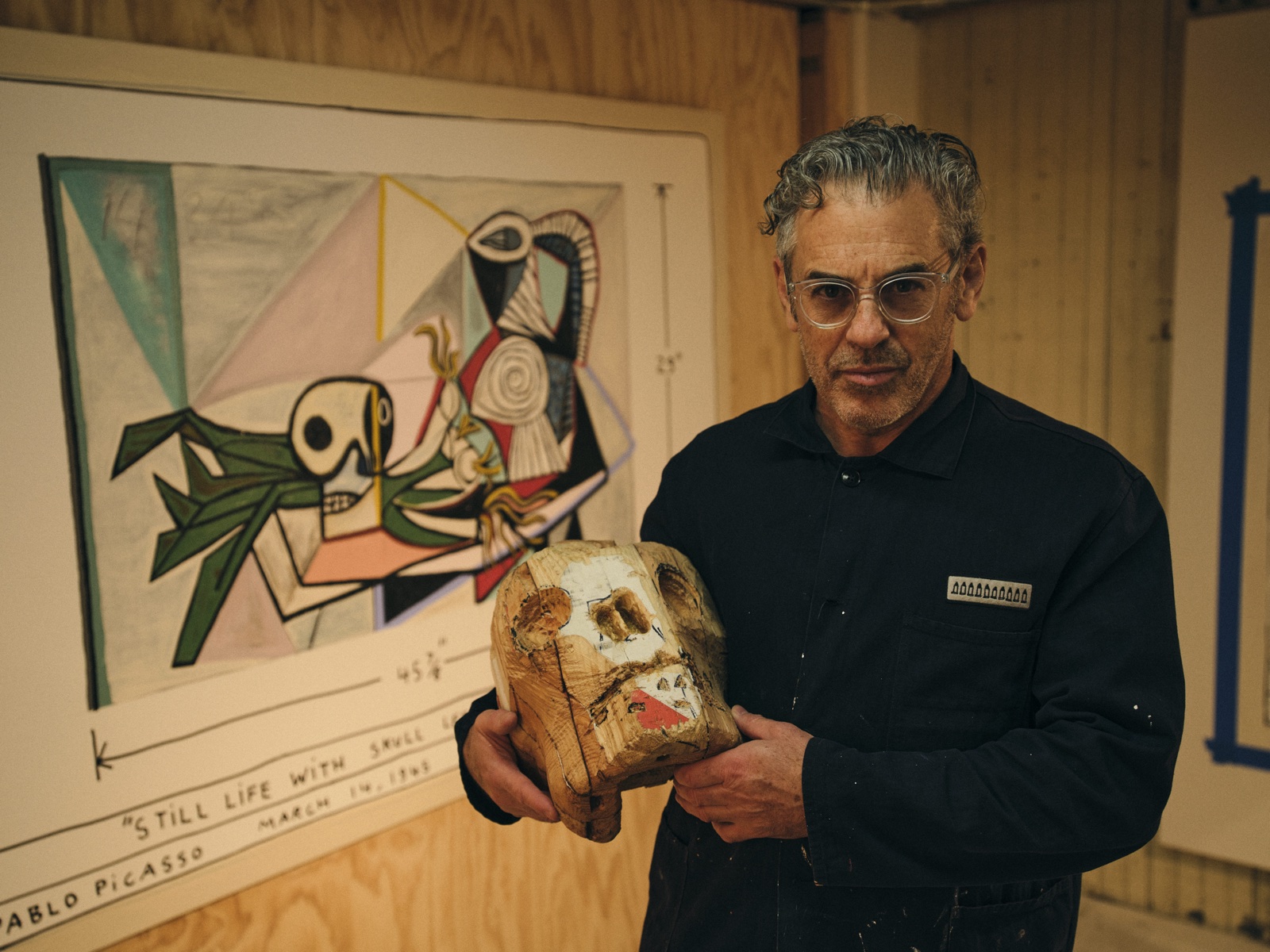
AM: Let's talk about Sympathetic Magic. Your keynote at South by Southwest this year was on it. What's your current perspective?
TS: I've been practicing Sympathetic Magic unknowingly, for most of my life, since I was a child. The thing about magic, one of the main operative things, is you don't need to completely understand it to employ its power.
This is intellectually and emotionally challenging because we're so used to the language and culture of understanding things before we execute them. But with magic—it doesn't always work the way you think it's going to work.
Sympathetic Magic is a form of thinking and action where 'like becomes like': building a voodoo doll to vanquish your enemy or a model of an ailing limb and imbuing it with thoughts of healing as a way of visualizing and creating health. It can be negative and positive. Magic has no morals. It's all up to the practitioner.
From my experience, when I consistently and ritualistically perform sympathetic magic and load my work and my daily activities with it, I get results. It's imperfect but the main thing is, if you believe that you will fail, you will fail. If you believe that you will succeed, you might succeed, and MIGHT is pretty good. If I was going to make a "how to make it as an artist" a to-do list or strategy list, that would be bullet number one: Keep trying, because even though most things are dead ends, I'd say for most people, one out of every four or so conversations turns into something. That means batting .250, which is good enough for the major leagues.
AM: So, it's more of a systemwide practice for you, not necessarily just focused on one body of work like the Space Program?
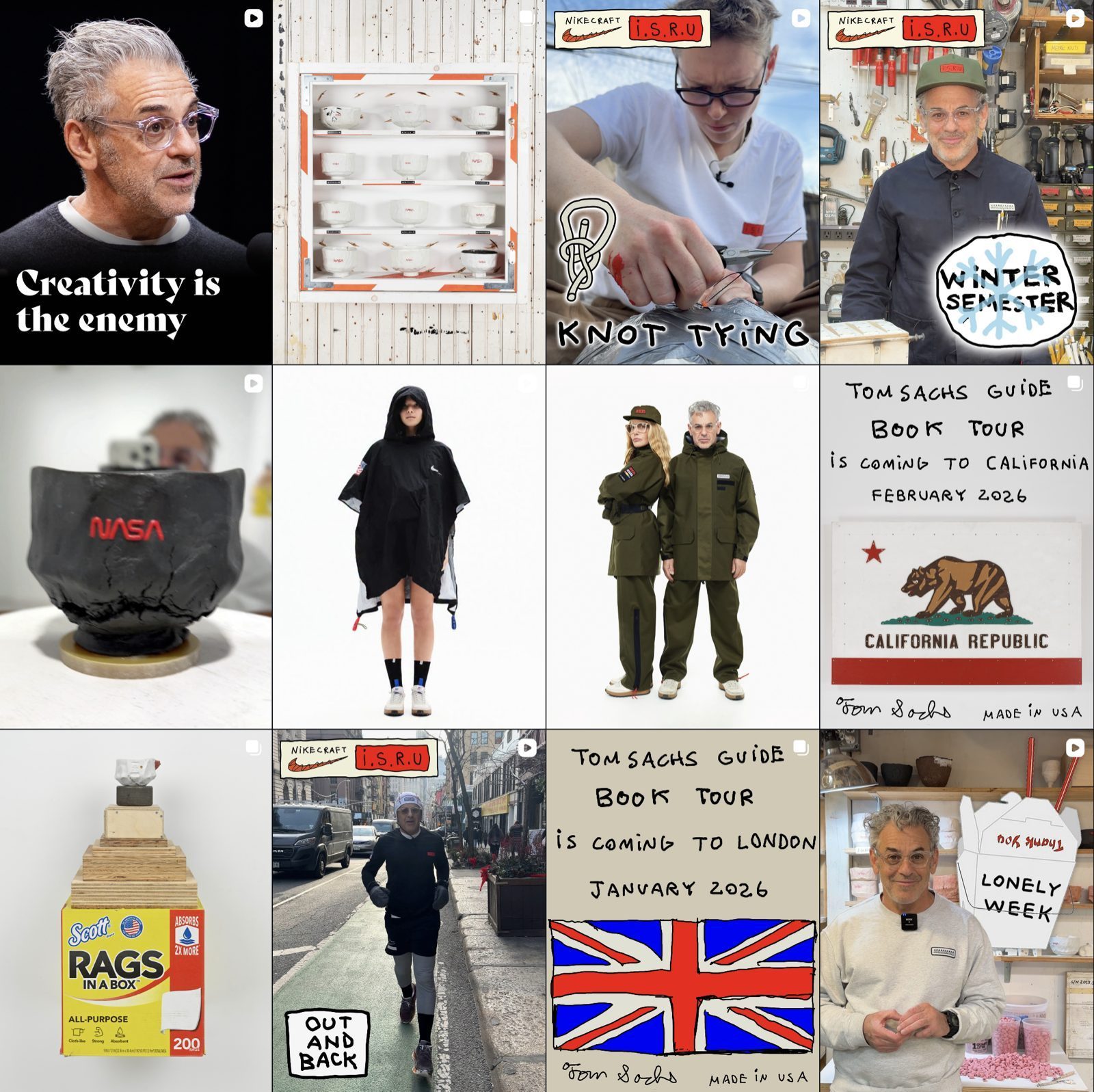
TS: It's in everything. It's in the Tea Ceremony. It's in the Space Program. It's in the things that I'm working on now. With NikeCraft I started out making my own bootleg Nike brand, and when some of the right people at Nike saw it, gave it some oxygen, it germinated and developed organically from something imaginary into something tangible.
AM: There's this thread of making work accessible to a large number of people and obviously ISRU touches that. How do you see that collapsing the studio practice from the very conceptual-art based sculpture and museum exhibition making all the way to how you use technology?
TS: I don't care if it's a sculpture, a painting, or a shoe, or a video, or a book, or whatever, even an interview. It's all sculpture to me. It all has the transparency and the values of sculpture. I view something like NikeCraft as an opportunity, a platform, as an accelerant to get those values out there.
When you say "conceptual art," I'm thinking specifically Six Years: The Dematerialization of the Art Object by Lucy Lippard and the artists in that book. Artists like Sol LeWitt, Yoko Ono, Marina Abramović, Chris Burden who made instructions as their art and then the execution of the work is almost secondary. Instructions and rules give art boundaries like a game. Guy Debord loved games and game theory. I recommend we all read The Infinite Game.

AM: What about Joseph Beuys's ideas around social sculpture and his practice with bringing people together.
TS: Although he is featured heavily in that book and in that time, Beuys is of a different camp. He believed that everyone is an artist. And that participation is a form of excellence. As long as you showed up to every lecture in Beuys's class at Kunstakademie Düsseldorf (1968-1974) you got an A. But don't you dare ask him to tell you how to make YOUR art!
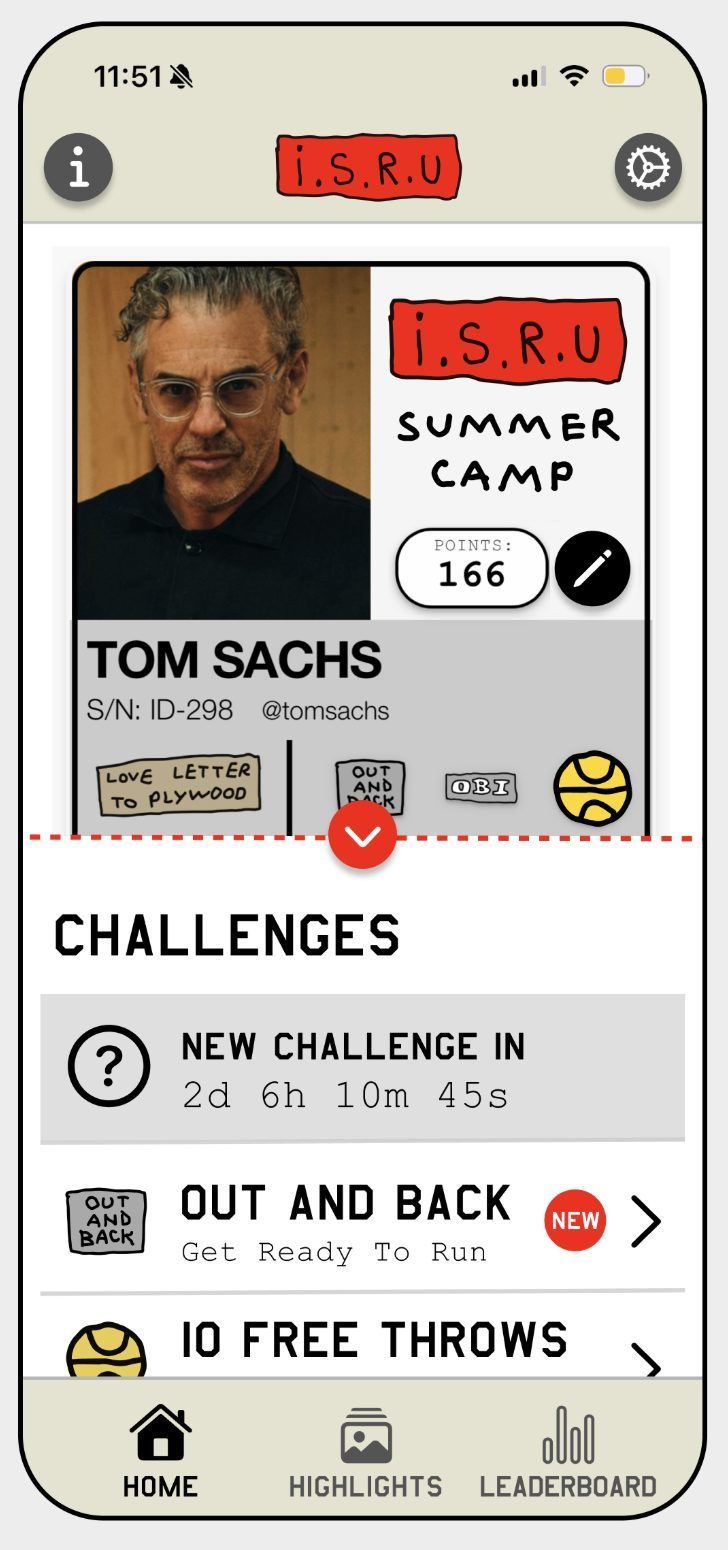
AM: You had 200,000 people download the ISRU app?
TS: 170,000 people downloaded the app, but also—we've had over four million individual submissions!
AM: That's kind of insane engagement. I've mentioned this to you before, those are organic numbers that startups kill for.
TS: It is a startup. We use technology to support the ideas. Computers must serve us. Read Attensity: No more human fracking! The rectangle is the pandemic.
AM: On the other end, your "mythmaking" is percolating through all these channels in a way that's kind of unseen in the art world or for a contemporary artist to do.
TS: I think if Beuys were alive today, he'd be doing Nike collaborations, yet some older people who knew him say, "No, he would hate it. He'd be working on environmental issues." And the reality is working within a system is a way of making a change. NikeCraft is still another product within Nike, but yet the critique of consumerism, which is now itself a consumer choice, is an option, and it's an option for you to take it more seriously, and if you can, take care of your shoes and own less and do more with one pair of shoes—and that's one of the values of NikeCraft—then you can take care of yourself…and your community…and your planet.
AM: Going back to your roots for a minute, working for Frank Gehry…
TS: Frank died this year, and while I worked for him thirty-five years ago, we always stayed in touch. He was brilliant and was the first adult who I met that used profanity with authority. He taught me many things. When I left his studio he said about others who left as a clear warning: "I hate when people rip me off and do it worse, it fucking pisses me off. If you're gonna rip me off, at least do it better!"
For a while, I thought I maybe wanted to pursue a career in architecture, and those impulses still are kind of alive and strong in the industrial design side of what I do, whether it's sneakers or furniture, and a lot of that work, even in the ceramics. A vessel is a vehicle for conveying water from the earth to our bodies. It's not that different from a ship that conveys our bodies from one continent to another, or one planet to another. Our bodies are what convey our genetic code from one generation to the next, so a lot of those ideas and values and constraints that come about from engineering vehicles find their way into the sculpture either from an engineering point of view or philosophically.
AM: There's been this theme that's come up with a lot of the other interviews for Culture Slop of…What is taste?
TS: I don't know what taste is, but I'll quote C. Montgomery Burns when he says, "I don't know about art, but I know what I hate, and I don't hate this that much." That might sound really cynical but taste is maybe something that people like, but, more than anything, it's an exclusionary act.
Although impossible to define, you know taste when you see it, when it works for you—that's your taste. One of the new crises with taste is that in this ecstasy of communication that we're living in, it's increasingly more difficult to find things that are uniquely yours. I think taste really defines who you are through what you consume or how you represent yourself. The clothes that you wear, the music that you listen to, the books that you read, the conversations that you have. But in mass culture it becomes tribal, yet it's generalized.
Think of the sports teams that you follow. Sol LeWitt was really into the Cleveland Indians, and I became friends with him towards the end of his life, and I'd be all fanboying: "Hey Sol, please tell me all about conceptual art. Did you meet Marcel Duchamp? What was Joseph Beuys like, was he cool? Was Andy Warhol nice?" And he'd be demure: "Yeah, Cleveland Indians, man…" and that's what his taste was.
He loved the Indians. He loved baseball and Cleveland was his team, he believed in them and rooted for them. Rejoiced and mourned the outcomes. That was important for him culturally.
The magic of spectator sports is tribal belonging, and people are willing to fight and kill and love each other over it.
The problem with art is that people write unnecessarily complex things to mask their stupidity. Yet the desire to belong is human and vital in sports as it is in art.