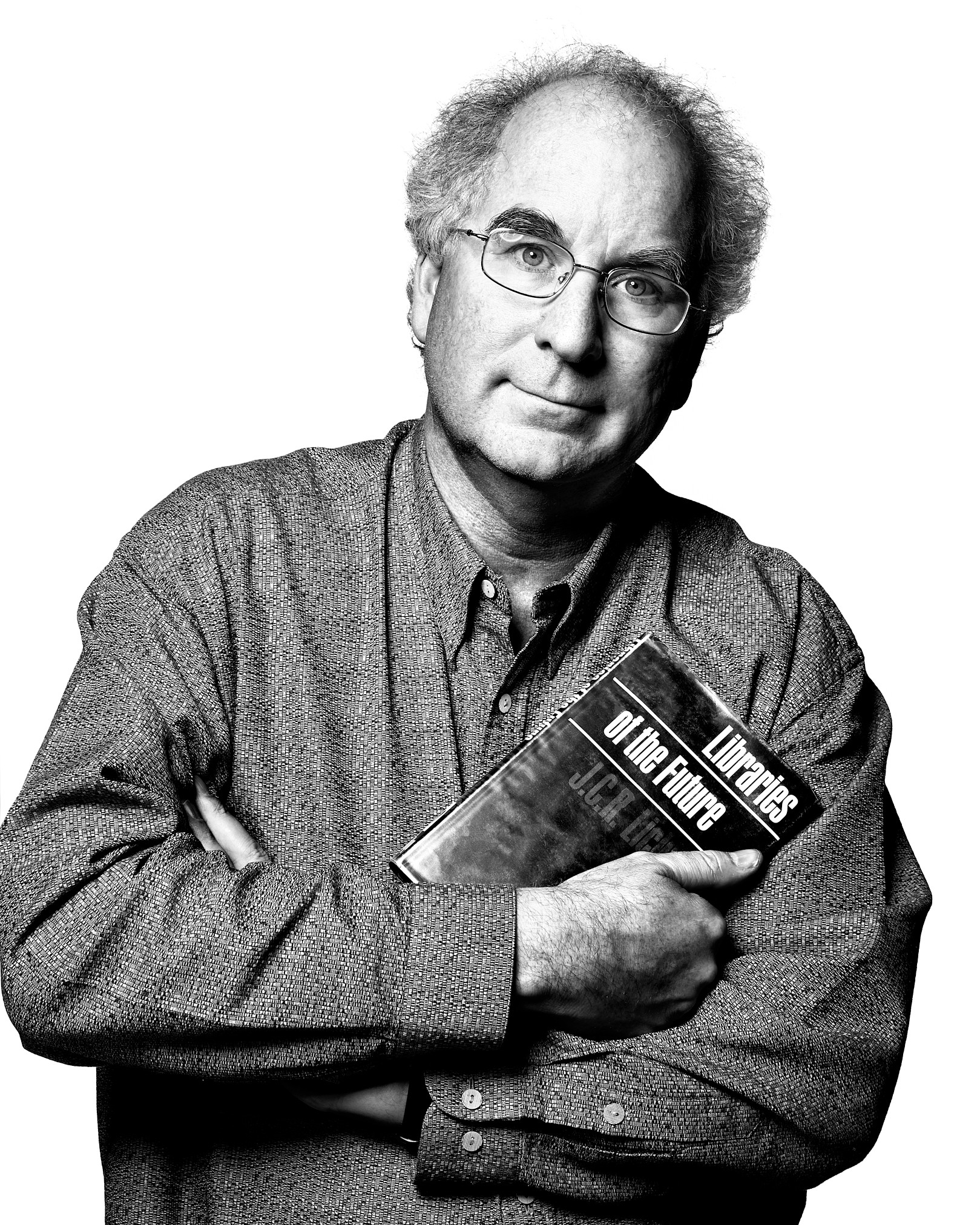
Andrew McClintock: Brewster, nice to see you, let's go back to the beginning — you studied under Marvin Minsky at MIT's AI Lab in the early eighties. Is that correct?
Brewster Kahle: Yes. Marvin Minsky and Danny Hillis at the AI Lab.
Andrew McClintock: And you were building supercomputers and very early on AI.
Brewster Kahle: Yes. Yes.
Andrew McClintock: Did you imagine that we would end up in the place we're in now? I know obviously a big intention behind you building the Internet Archive early on came from your time there.
Brewster Kahle: Yes, the idea of building libraries that you would talk to, that would be interesting to talk to with human language, was always the goal. And if we're going to build these things up, it should know interesting things. I mean, the libraries support the publishing industry, but they bring things together from many different points of view and… over time and make that available to make it so that people that are curious enough to want to have access can go and make new ideas that are worthy of being in the library. [...]
And instead of having libraries be important institutions, they've been run over by more and more concentrated levels of power by mega publishing conglomerates, right? And that's, whether you call them platforms if you're talking about the end-user use or the upstream publishing conglomerates that own radio, television, print, books, and there's just fewer and fewer of these that are just hoovered all together and they've basically made it so that libraries are under serious structural threat. And when you have these sorts of centralized points of control, and whether they're extreme capitalists or extreme authoritarians, they fit very naturally together.
Andrew McClintock: You've been talking about this concept of public AI. What does that mean?
Brewster Kahle: If we roll time back to the vision of what, for me, the whole internet was for, was to build the library. It's to build the Memex, to build the Xanadu, to build Engelbart's hypertext world. It's to build the global brain. It's to make it so that we could interconnect information better and more efficiently. As Newton put it, we want to stand on the shoulders of giants, the only reason why we can see so far is because we stand on the shoulders of giants, which is in the literature. And so, how are you going to do that? [...] We want to see lots and lots of research organizations and cultural heritage organizations participating with the very best information they have, the best technology to take cracks at the big public problems we've got like climate change, like fighting disinformation, health care, like vaccine development. Let's build public AI!
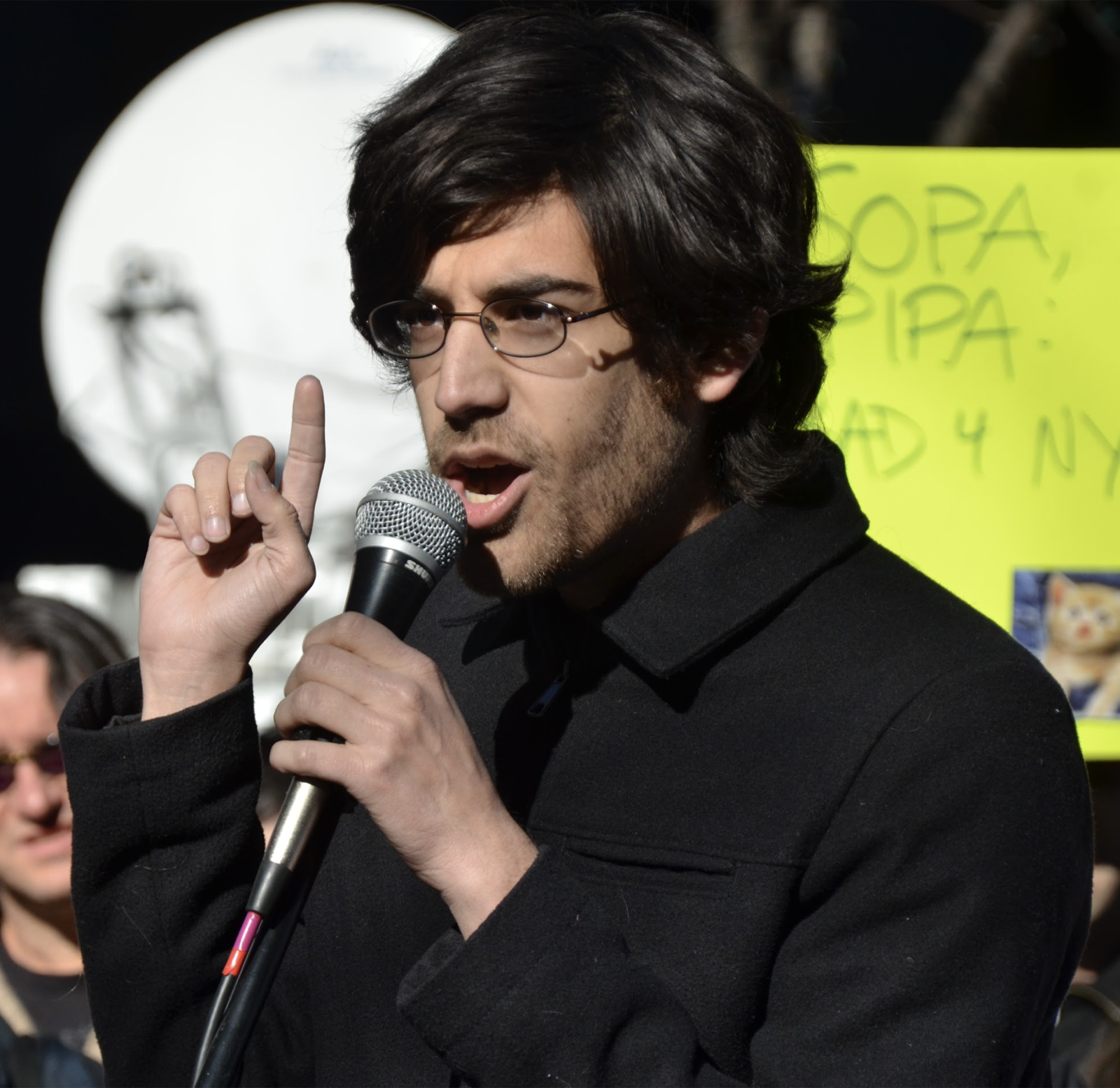
Andrew McClintock: Got it. I want to shift gears. I'd love to talk about Aaron Swartz — he's obviously such an important figure for many reasons. He helped you build the Open Library [...] And I know that you were close with him. Why was he so important and why do we need more figures like him in today's world?
Brewster Kahle: Yes. Aaron was not only a smart young man…but he learned extremely fast. And the way that he learned was to be completely open all the time. It's sort of like having your journals live on the internet. So there were so many people that learned from him because he would put out these missives and they were just a stream of, it's like what we would put in our journal that we would put a lock on. He just made it all public. He lived an open-source life and he was crushed for it. He championed public access to the public domain and when he dared take government documents and make them available on the Internet Archive, the government agency called the FBI and the FBI went and surveilled his house in Chicago. [...] He spent all his money from helping found Reddit on lawyers and isolated him so that anytime he talked to people that he was close to they would get deposed within days.
They threatened him with thirty-five years in jail and it was for reading too fast in a library. I mean, really. And this young man, he could have become a senator. But he's a principled young man and didn't want to have a felony on his record for something and the prosecutors never stopped until they drove this young man to suicide. And so we celebrate his birthday every year at the Internet Archive, Aaron Swartz Day, organized by Lisa Rein. And over the years it's grown [...] so yes he was an inspiration for a generation and he was living openly and believing in openness and access to the public domain.
Andrew McClintock: Heavy topic. [...] Can you talk about the Wayback Machine and also combating how the web is deteriorating or decaying and what that means for information?
Brewster Kahle: We hit a milestone of one trillion web pages in the Wayback Machine from maybe a billion people's voices. Hooray for the Internet Archive or hooray for the web. But really the point is that people are awesome — if people are given the opportunity to share for free what they know to the world, they'll do right. That completely blows away those theories of, hey, except for you and me, everybody else is really stupid.
We're able to stand on the shoulders of those giants. But interestingly, we're not able to stand on the shoulders of the published works. The scientific literature is almost all kept hidden. It's almost as if all gatekeepers have stepped in to make sure that we don't get the Library of Congress on our desktop. So if you take the Memex paper from 1945, it was supposed to be the Library of Congress — that's what we talked about while building a global brain at Thinking Machines [...]
The enshittification that our friend Cory [Doctorow] talks about, he's very eloquent on Chokepoint Capitalism, by just having too few players you don't end up with capitalism where you buy and sell things. You only have things that are licensed. They're only available through a few platforms. And those platforms, whether they're back-end or front-end publishers, try to leverage these things that they often get for free, whether it's Reddit or Elsevier getting academic writings.
And then they change the laws so nothing comes into the public domain, for hundreds of years, and they keep stretching it to be longer and longer and the politicians are just perfectly happy to go and do whatever those big corporations do. And we've ended up with an information ecosystem that people don't trust. [...] "Who owns culture" as Michael Lesk put it, which I think is the world we have.