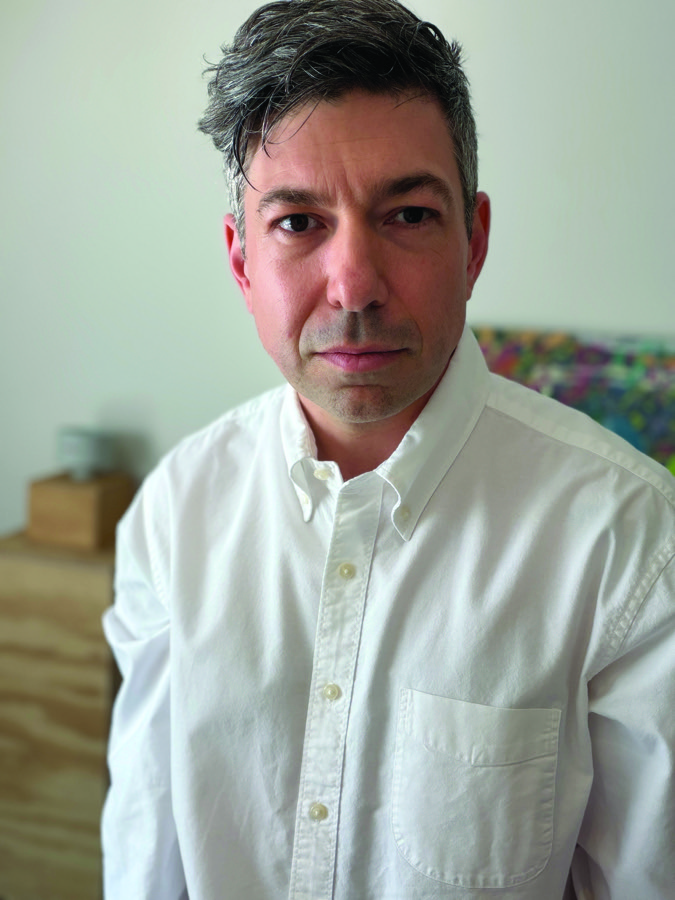
The last magazine I founded was the San Francisco Art Quarterly (SFAQ), which operated from 2010 to 2018 and published forty-one print issues with a circulation of 50,000 copies per issue. I never once wrote a letter from the Editor. I always found the practice cringe.
Culture Slop is different. There is some tension here to explain. I feel it. My editors and the team feel it. But that was one of the core motivations behind wanting to bring this publication into existence. Tension is good—it makes you reconsider your position. And trust me, your position is slippery.
Since 2009, I’ve founded and operated multiple platforms and businesses across the Art World, Tech/Startups, and Media. Operating at this intersection has made me realize how similar, amazing, creative, and problematic each of these industries are. It’s also exhausting to be in a culture bubble surrounded by people who think they know everything—I’d rather spend that time staring out the window, watching the sun wrap itself around a tree.
In the summer of 2024, I had just shut down my seed-stage VC-backed startup, On Approval, after a toxic battle with my ex-cofounder, despite our lead investor and I trying to save it through restructuring and cutting dead weight. As I was reconnecting with myself in the wake of this drama, I picked up Kyle Chayka’s book Filterworld: How Algorithms Flattened Culture. It reminded me of how I used to think pre-COVID, pre-startup, pre-Art World. Back to my early days of Ever Gold [Projects] and SFAQ in the Tenderloin when all that mattered was doing cool shit for culture simply because it was cool shit. Simpler times, “offline times”, perhaps naive times, but a time and space that allowed for slowness, thoughtfulness, and creativemaxxing.
It seemed that a lot of smart people were feeling the same way I was feeling about culture, they just couldn’t explain it as clearly as Kyle had in his book. Upon finishing Filterworld I stopped listening to the YC and Product Manager trash podcasts I had become inexplicably addicted to and started doing deep reading. Deep thinking. I went down a wormhole and consumed across the lines: industry lines, culture lines, left, center, right, up, down. A number of the writers and thinkers who moved me ended up in Culture Slop, others left their mark on how I have conceptualized Culture Slop. Writing that is pretentious, accessible, theory, meme culture, internet culture—Gen Z to Boomer. It was inspiring to go down this wormhole. It was freeing. It was deeply human.
One of the first people I spoke with about this new publication when I was trying to figure out what it was was Stewart Brand—because of his work with the Whole Earth Catalog. I was trying to synthesize what access to tools meant then, versus access to what “curated” information means now.
Those early conversations about Culture Slop with people who have shaped or are actively shaping culture brought me back to the first principles of my curatorial instincts, or my practice of organizing objects, people, and ideas. My life and the people in it had become a map of intersectionality, a weird Venn diagram of experiences and viewpoints that I wanted to share. “Just do a podcast,” my friends said. “Do a Substack.” But I wanted to create something that harkened back to an earlier time, an earlier me. Before the algorithms flattened us. So I chose to make a free print magazine that covered art, tech, and culture. Like the best kinds of conceptual art it would be ephemeral, with self-imposed restraints, and a very bad ROI.
I’m not naive—I know this magazine might just be contributing to the noise, or might read like some millennial unc’s attempt at something. But my hope is that if you consider yourself squarely in one camp of Art, Tech, or Culture that one of the visionary individuals in this magazine will help you expand your viewpoints, give you an excuse to go down a wormhole, or calm your nervous system and remind you that you can’t control anything anyway.
The tension between all of these domains is the point, as the agreements and disagreements between each of these worlds constitutes the fabric of our current reality.
If you really think about it—it’s amazing that we can even see each other at all.